
Add sales tax
Free sales tax calculator
Enter a pre-tax subtotal and the applicable sales tax rate to calculate the tax amount and total customer price.
Free, no sign-up, and the entered values stay in your browser.
How to use the sales tax calculator
- 1
Choose the currency used for the sale.
- 2
Enter the price before tax.
- 3
Enter the combined rate that applies to this transaction.
- 4
Review the tax amount and final customer total.
Sales tax = price before tax × rate. Customer total = price before tax + sales tax.
Average combined sales tax across the United States
The map uses the same midyear 2026 average combined rates as the table above. Darker states have a higher state-plus-average-local rate; the map is for comparison, not address-level tax lookup.
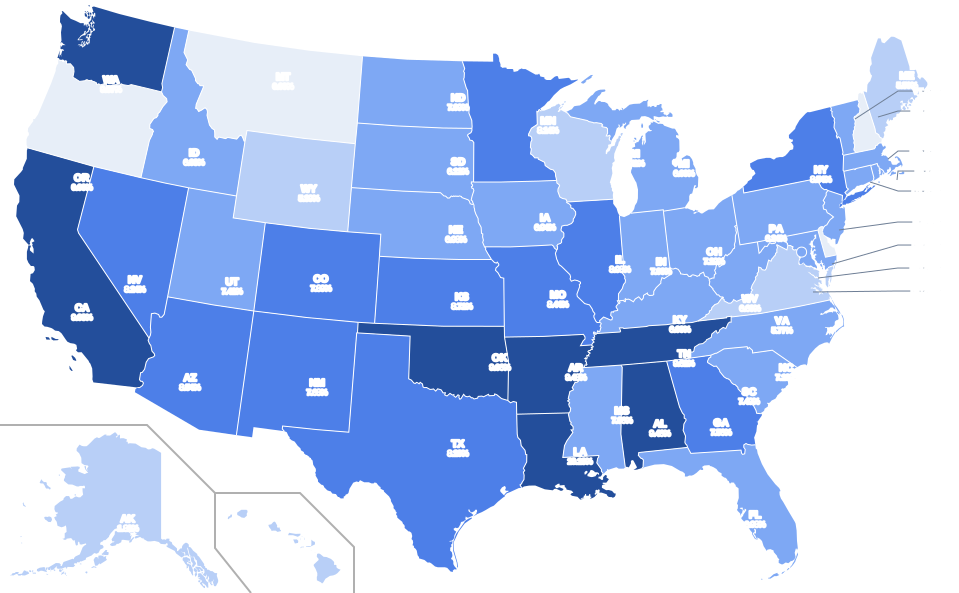
- 0%
- Below 6%
- 6%–7.49%
- 7.5%–8.99%
- 9% or more

Midyear 2026 state and local sales tax reference
The table shows the state rate, population-weighted average local rate and average combined rate reported for July 1, 2026. It is useful for comparison, but a transaction can use a different city, county, district or special rate.
| State | State rate | Average local | Average combined |
|---|---|---|---|
| ALAlabama | 4.00% | 5.46% | 9.46% |
| AKAlaska | 0.00% | 1.82% | 1.82% |
| AZArizona | 5.60% | 2.94% | 8.54% |
| ARArkansas | 6.50% | 2.98% | 9.48% |
| CACalifornia | 7.25% | 1.78% | 9.03% |
| COColorado | 2.90% | 4.99% | 7.89% |
| CTConnecticut | 6.35% | 0.00% | 6.35% |
| DEDelaware | 0.00% | 0.00% | 0.00% |
| FLFlorida | 6.00% | 0.98% | 6.98% |
| GAGeorgia | 4.00% | 3.56% | 7.56% |
| HIHawaii | 4.00% | 0.50% | 4.50% |
| IDIdaho | 6.00% | 0.03% | 6.03% |
| ILIllinois | 6.25% | 2.73% | 8.98% |
| INIndiana | 7.00% | 0.00% | 7.00% |
| IAIowa | 6.00% | 0.94% | 6.94% |
| KSKansas | 6.50% | 2.21% | 8.71% |
| KYKentucky | 6.00% | 0.00% | 6.00% |
| LALouisiana | 5.00% | 5.13% | 10.13% |
| MEMaine | 5.50% | 0.00% | 5.50% |
| MDMaryland | 6.00% | 0.00% | 6.00% |
| MAMassachusetts | 6.25% | 0.00% | 6.25% |
| MIMichigan | 6.00% | 0.00% | 6.00% |
| MNMinnesota | 6.88% | 1.26% | 8.14% |
| MSMississippi | 7.00% | 0.06% | 7.06% |
| MOMissouri | 4.23% | 4.22% | 8.44% |
| MTMontana | 0.00% | 0.00% | 0.00% |
| NENebraska | 5.50% | 1.48% | 6.98% |
| NVNevada | 6.85% | 1.39% | 8.24% |
| NHNew Hampshire | 0.00% | 0.00% | 0.00% |
| NJNew Jersey | 6.63% | -0.02% | 6.60% |
| NMNew Mexico | 4.88% | 2.80% | 7.68% |
| NYNew York | 4.00% | 4.54% | 8.54% |
| NCNorth Carolina | 4.75% | 2.35% | 7.10% |
| NDNorth Dakota | 5.00% | 2.09% | 7.09% |
| OHOhio | 5.75% | 1.54% | 7.29% |
| OKOklahoma | 4.50% | 4.56% | 9.06% |
| OROregon | 0.00% | 0.00% | 0.00% |
| PAPennsylvania | 6.00% | 0.34% | 6.34% |
| RIRhode Island | 7.00% | 0.00% | 7.00% |
| SCSouth Carolina | 6.00% | 1.49% | 7.49% |
| SDSouth Dakota | 4.20% | 1.91% | 6.11% |
| TNTennessee | 7.00% | 2.61% | 9.61% |
| TXTexas | 6.25% | 1.95% | 8.20% |
| UTUtah | 6.10% | 1.32% | 7.42% |
| VTVermont | 6.00% | 0.43% | 6.43% |
| VAVirginia | 5.30% | 0.47% | 5.77% |
| WAWashington | 6.50% | 3.07% | 9.57% |
| WVWest Virginia | 6.00% | 0.60% | 6.60% |
| WIWisconsin | 5.00% | 0.72% | 5.72% |
| WYWyoming | 4.00% | 1.39% | 5.39% |
| DCDistrict of Columbia | 6.00% | 0.00% | 6.00% |
No matching states.
Averages are not address-level tax rates. New Jersey’s negative local average reflects qualifying reduced-rate areas. Alaska has no statewide sales tax but permits local sales taxes.
Rules that affect the number
Location, products and exemptions
A sale may be sourced to the seller, delivery address or another location under state rules. Groceries, medicine, services, resale purchases and exempt buyers can receive different treatment.
Records and deductions
Keep the taxable amount, rate, tax collected, location and exemption documents with the sale record. An individual who itemizes federal deductions may elect eligible state and local general sales taxes instead of state and local income taxes; a business should classify its own purchases and collected tax with its accountant.
Pricing and profit
Decide whether a displayed price is before tax or tax-inclusive before quoting it. Sales tax collected for a government is generally not business revenue, so keep it separate when reviewing price, margin and cash available.
Online sales and economic nexus
A seller can have collection duties without a storefront in the customer’s state. Physical presence, economic-nexus thresholds and marketplace-facilitator rules can assign collection and filing duties, so review each state where sales are made.
Sales tax, VAT and GST are not interchangeable
All three can affect the customer price, but they are administered differently. Use the system and invoice wording required where the transaction is taxed.
| System | How it is collected | What to confirm |
|---|---|---|
| Sales tax | Usually collected once at the taxable retail sale | State and local rate, sourcing, taxable item and exemption |
| VAT | Collected through stages of the supply chain with input-tax credits | Registration, place of supply, rate, tax invoice and credit rules |
| GST | Usually operates as a value-added tax under local legislation | Local registration threshold, rate, invoice and credit rules |
What the calculator can—and cannot—tell you
The calculator applies the rate you enter to a pre-tax price. It does not determine whether the transaction is taxable, which address controls the rate, whether the buyer is exempt, or whether the seller must register. Those questions must be answered before the arithmetic is useful.
Three calculations worth checking
Tax added to a price
$250.00 × 7.50% = $18.75Customer total: $268.75Back tax out of a tax-inclusive total
$108.00 ÷ 1.08 = $100.00Tax included: $8.00Combine state and local rates
6.00% + 1.25% = 7.25%Enter 7.25%, after confirming the transaction addressWhy U.S. sales tax is unusually location-specific
The United States has no single federal retail sales tax. State rules developed separately, and many states also authorize counties, cities and special districts to add local taxes. That structure explains why a nearby delivery address can change the combined rate and why a state average cannot be used as a transactional lookup.
Choose the rate only after locating the sale
The controlling location can depend on whether the customer collects the goods, the seller delivers them, the product is digital, or a service is performed across locations. State sourcing rules can be origin-based, destination-based or product-specific.
- 1
Identify every state where the business has a physical or economic connection.
- 2
Classify the product or service under that state’s rules.
- 3
Determine the transaction address and the applicable state and local jurisdictions.
- 4
Check for buyer, resale or product exemptions before applying the rate.
Taxability and exemption questions to resolve
A zero rate and an exempt sale are not the same. A state may have no statewide sales tax, a product may be exempt, or a buyer may present a valid certificate. Keep the reason and supporting record with the transaction.
| Situation | What to verify | Record to keep |
|---|---|---|
| Retail goods | Whether the item and any delivery charge are taxable | Invoice and destination |
| Services | Whether the specific service is taxable in that state | Scope, place performed and customer location |
| Resale purchase | Whether the buyer gave a valid resale certificate | Certificate and buyer details |
| Exempt organization | Whether the exemption applies to this purchase | Exemption certificate or authorization |
| Marketplace sale | Whether the marketplace collects and remits | Marketplace statement and order record |
Sales tax deductions: individual and business treatment differ
Do not treat collected customer tax as the same issue as tax paid on purchases. The correct federal and state treatment depends on who paid the tax and why.
Individual federal return
A taxpayer who itemizes may elect state and local general sales taxes instead of state and local income taxes. The IRS permits an actual-receipt method or optional tables, subject to the Schedule A rules for that tax year.
Business records
Tax collected from customers is generally recorded as an amount owed to a tax authority, not sales revenue. Tax paid on business purchases may become part of an asset cost or an expense; use the reporting rules for the relevant business form and state.
Online sales and economic nexus
After South Dakota v. Wayfair, a state may require an out-of-state seller to collect tax without physical presence when state law creates economic nexus. Thresholds, included sales, measurement periods and marketplace rules differ by state, so monitor sales separately for each state and confirm the current rule before registering.
A practical sales tax filing checklist
The calculation is only one line in the process. A clean record should let someone trace the rate, taxable amount, exemption and payment back to the transaction.
Confirm registration before collecting tax.
Use the transaction’s current state and local rate.
Store the taxable amount, rate, tax and jurisdiction.
Retain exemption and resale certificates.
Reconcile collected tax to returns and payments.
File on the schedule assigned by each authority, including zero returns when required.
Tax-exclusive and tax-inclusive pricing affect margin differently
When tax is added at checkout, a $100.00 pre-tax price remains $100.00 of sales revenue. When $100.00 is advertised as tax-inclusive at an 8% rate, the pre-tax amount is $92.59 and the included tax is $7.41. If the business does not separate the included tax, revenue and margin appear higher than they are.
Terms that change the answer
- Combined rate
- The state rate plus applicable county, city, district or other local rates.
- Sourcing
- The rule used to decide which jurisdiction’s tax applies to a transaction.
- Nexus
- A connection that can create registration, collection and filing duties.
- Marketplace facilitator
- A platform that may be required to collect and remit tax for marketplace sellers.
- Exemption certificate
- Documentation supporting why tax was not collected from a qualifying buyer or transaction.
More sales tax questions
Can I use the state average as my checkout rate?
No. The average is a comparison measure. Use the current rate for the transaction’s actual jurisdiction and product or service.
Is shipping taxable?
It depends on the state, the item, how the charge is stated and how delivery is arranged. Check the state’s current rule for the transaction.
Is a service taxable?
Some states tax broad categories of services, some name specific services, and others tax relatively few services. Classify the exact service in the relevant state.
Does a resale certificate remove every tax obligation?
No. It supports a qualifying resale purchase, but the seller must accept and retain it under the state’s rules. It does not cover unrelated personal or business use.
Should collected sales tax be included in revenue?
It is generally tracked as a liability owed to the tax authority rather than operating revenue. Confirm the accounting treatment for the business and jurisdiction.
Common sales tax questions
Who is responsible for collecting sales tax?
A registered seller usually collects and remits the tax, although marketplace-facilitator rules may place that duty on the marketplace. The responsible party depends on the state and transaction.
Do online sales always require sales tax?
Not always. A seller’s physical presence, economic activity, product taxability, customer location and marketplace rules determine whether registration and collection are required.
How often is sales tax filed?
The tax authority assigns a filing schedule, often monthly, quarterly or annually. The frequency can change with sales volume or account status.
What happens if tax was not collected?
The seller may still owe the tax and may also face interest or penalties. Review the affected transactions and contact the responsible authority or a qualified tax professional promptly.
Current sources used for this guide
Rates and obligations change. Check the official authority for the transaction before collecting, reporting or deducting tax.
Continue the same business task.
Sales tax on invoices
Continue from the calculation with a related Pocket Invoice tool, template or practical guide.
Open resource →Create a taxed estimate
Continue from the calculation with a related Pocket Invoice tool, template or practical guide.
Open resource →Tax invoice comparison
Continue from the calculation with a related Pocket Invoice tool, template or practical guide.
Open resource →